
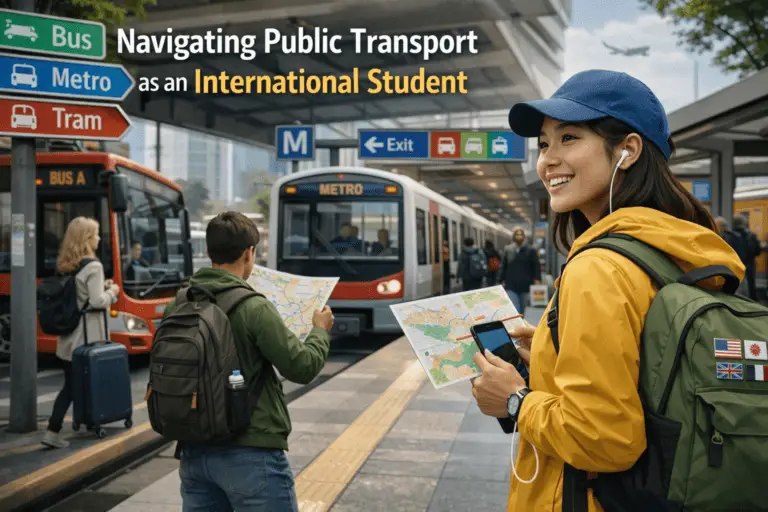
Stepping off that plane, the rush of a new country hitting you – whether it’s the dizzying pace of London, the vibrant rhythm of Berlin, or New York City’s endless energy – it’s an incredible feeling, isn’t it? You’ve made it! But then, after the initial wonder, a very practical question pops up: “How do I actually get around this place?” For so many Indian students, the sheer size and unfamiliarity of public transport systems abroad can feel like trying to solve a super complex puzzle in a language you’re just learning. And trust me, that’s absolutely normal.
Students often describe the London Underground as a bewildering maze or the German U-Bahn network as utterly confusing at first. Yet, give them a few weeks, and these same students transform into seasoned commuters, effortlessly zipping across their new city with the confidence of a local. Feeling a little lost initially? That’s part of the adventure. Most international students go through it. But figuring out public transport? That’s your golden key to truly unlocking and experiencing your new academic home right from day one. You’ll gain independence, save precious money, and truly embed yourself in the city’s unique beat.
This isn’t just about finding your way from the dorm to the lecture hall. It’s about being smart with your hard-earned rupees, staying safe in unfamiliar surroundings, and genuinely integrating into the daily pulse of your chosen city. Imagine every rupee you save by skipping expensive cabs is a rupee you can spend on exploring a local market, visiting an iconic museum, or sharing a delicious meal with your new friends. These transport savings really do add up, helping your overall budget. Remember that IMFS also provides up-to-date guidance on estimated tuition fees and accommodation costs for various universities and cities, crucial for your 2026 financial planning. And knowing your way around the transport network gives you a huge boost of confidence, fostering independence and letting you spread your wings.
Here at IMFS, we’ve helped thousands of Indian students successfully transition to life abroad. We know the common hurdles, and more importantly, we know the best strategies to overcome them. So, let’s dig deep into how you can conquer these urban giants – from snagging the right ticket to navigating safely, all broken down with a special focus on what actually works for Indian students like you. Remember, all cost estimates and financial details are based on 2026 data and market estimates, subject to annual adjustments and local policy changes.
A quick thought before we dive in: Before you even think about public transport, be aware of university application deadlines and intake dates. For the 2026-2027 academic year, Fall 2026 application deadlines for many top universities typically fell in late 2025 (e.g., December 2025 – January 2026 for early rounds, March-May 2026 for regular). Spring 2027 applications usually open around mid-2026. These are your first crucial steps. We also recommend checking the latest available QS World University Rankings, THE World University Rankings, or ARWU Gold Standard Rankings for your university selection. As of early 2026, this typically refers to the 2025/2026 editions. The 2026/2027 rankings are usually published later in the year (e.g., June-September 2026).
Your First Ride: Conquering Tickets and Travel Passes
Let’s get straight to it: buying tickets. Every city, bless its heart, has its own quirks in how it handles fares, payment, and validation. Understanding these early on will save you a ton of headaches – and, vital for any student, a good chunk of change. Coming from India, where transport payment methods can be incredibly varied, adapting to a new system is genuinely a core skill you’ll need to pick up fast.
London’s Tap-and-Go: Oyster and Contactless
When you land in London, you’ll quickly discover two fantastic allies: the classic Oyster card or, even simpler for us tech-savvy folks today, your contactless international debit/credit card. Here’s a tip straight from our IMFS pre-departure briefings: Many leading Indian banks now offer international debit/credit cards with excellent contactless features (e.g., Visa, Mastercard). It’s crucial to check with your specific bank and ensure your card is internationally enabled. Before you leave, call your bank and confirm your card is enabled for tap-and-go payments abroad. This is an essential banking step for all international students, often implicitly required to demonstrate sufficient funds or access to funds as part of visa applications. It’s an absolute game-changer!
Picture this: you’ve just made the long journey to Heathrow, tired but buzzing. Instead of fumbling through unfamiliar coins, you simply tap your card at the Tube barrier, and you’re good to go. The system is incredibly smart; it automatically calculates the best fare for all your journeys within a single day, ensuring you never pay more than a daily Travelcard. The Oyster card works much the same way – you load it with credit or a travel pass. You can pick one up at any Tube station, Oyster Ticket Stop, or even many newsagents.
Now, a smart move for you, especially if you’re planning frequent trips within central London (which usually means Zones 1-2 for most students), is to get a weekly or monthly Travelcard. You load this directly onto your Oyster card. This will almost certainly be more economical than paying per journey day-to-day. From our experience at IMFS, students who plan to use public transport daily find significant savings with these passes. Always, always check the Transport for London (TfL) website for the very latest fares. TfL typically finalizes fare reviews by March for changes effective from around March 3rd. For the most current 2026 fare information, which was published in late 2025 or early 2026, check their official source: Transport for London – Fares & Payments.
What if your card doesn’t work? Don’t panic! Most stations have ticket machines where you can buy a single paper ticket. If your international contactless card isn’t accepted, having a small amount of local currency (e.g., £50-£100 in London, €50-€100 in Berlin) or a backup travel card, is always a good idea for your first few days. This can cover immediate transport or emergency purchases.
Germany’s Zonal Ticketing and the Validation Rule
Germany’s public transport, common in bustling hubs like Berlin, Munich, or Frankfurt, typically operates on a zonal fare system. This means the price of your ticket depends on how many geographical zones you travel through. You’ll find tickets available from machines at stations – almost all with English language options. What many IMFS students find useful is the DB Navigator app, which is excellent for Deutsche Bahn (regional and national train) services. For local transport within Berlin, the official BVG Fahrinfo app is often preferred for more detailed metro, tram, and bus real-time information.
Here’s an absolute golden rule for Germany, something we stress at IMFS: Validation is non-negotiable! It’s not enough to simply buy the ticket; you must validate it before you board. Look for small stamping machines, often labelled “Entwerter,” either on the platform or inside buses and trams. Skipping this tiny but crucial step can lead to hefty fines, typically starting at €60 (as of 2026) on the spot, and potentially higher for repeat offences. Always check with the local transport authority for exact penalty fares. I still remember a story from a student in Munich who, on his very first day, bought a ticket but didn’t validate it. He genuinely thought he was covered. A ticket inspector explained the rule rather firmly, and he ended up with a €60 lesson. You certainly don’t want that kind of unwelcome introduction to German efficiency!
New York City’s MetroCard and the OMNY Future
In the iconic “Big Apple,” the MetroCard has long been standard for its subways and buses. You can grab single rides, load money onto a “pay-per-ride” card, or if you’re commuting frequently, an unlimited ride MetroCard for a week or a month is often cost-effective. If you’re living in Manhattan or crisscrossing the boroughs for classes or work, that unlimited option will likely become your best friend.
But hold on, things are changing quickly in NYC! The city is rapidly rolling out OMNY (One Metro New York), its new contactless payment system. Just like in London, you’ll soon be able to simply tap your debit/credit card or even your smartphone to pay your fare. The Metropolitan Transportation Authority (MTA) is on track to complete the full transition from MetroCard to OMNY by late 2026. Students should absolutely monitor MTA announcements for the latest updates on this transition. This ongoing modernisation means it’s vital to always check the official MTA website for the very latest updates on payment methods before you travel: MTA NYC Transit – Fares & MetroCard Info. Mastering these payment methods not only saves you money but also contributes to your overall financial management, a skill that can indirectly support any future visa extensions or immigration processes requiring proof of financial stability.
Over our decades of guiding students at IMFS, we’ve found that those who download the local transit authority app before they even leave India arrive feeling significantly more confident. They can explore routes, check fares, and even plan their journey from the airport before they’ve even set foot on local soil. It’s a simple pre-departure step that turns potential anxiety into tangible readiness.
Student Discounts: Your Financial Lifeline Abroad
Who doesn’t love a good discount, especially when you’re managing a student budget thousands of miles from home? It’s not just a perk; it’s practically a necessity. Public transport operators globally understand that students are a huge part of their daily ridership and frequently offer fantastic savings. Don’t, under any circumstances, leave money on the table when you don’t have to!
While managing daily expenses, remember to also explore scholarship opportunities; many universities and external bodies offer financial aid to international students, which can significantly ease your financial burden. UNESCO reports often highlight the importance of financial access for international students, reinforcing the value of these savings, UNESCO – Global Education Monitoring Report.
London’s 18+ Student Oyster Photocard: An Absolute Must!
If you’re studying in London for more than 14 weeks, please hear this loud and clear: you must apply for the 18+ Student Oyster photocard. This isn’t just a minor concession; it’s a financial lifeline. This card not only functions as an ID but typically provides a significant 30% reduction on adult-rate weekly, monthly, and annual Travelcards and Bus & Tram Passes (as of 2026 fares and policies). Think about the cumulative savings over a year – it’s truly significant, easily hundreds, if not thousands, of pounds. The application process usually involves your university confirming your enrollment, so start this process as soon as you have your admission letter. A common pitfall we’ve observed at IMFS is students delaying this or not even knowing it exists. Don’t be one of them! You’ll find details on TfL’s website under “Students & Young People discounts.”
Germany’s Semesterticket: A Golden Perk for German Students
This is one of the most brilliant aspects of student life in Germany. Very often, the Semesterticket is either already included in your university tuition fees or comes as part of a mandatory student contribution (Semesterbeitrag). This incredible ticket grants you access to regional public transport networks, allowing you to travel freely within a designated area for the entire semester. The coverage can vary – some tickets might cover just your immediate city, while others extend across an entire state or even further. Make it a point to check your university’s student services or international office website for these details as soon as your admission letter arrives. This alone can save you hundreds of Euros each semester. Imagine having free travel built into your fees – truly a weight off your shoulders! Our students consistently tell us it’s one of the best perks of studying in Germany.
Student Discounts Beyond Europe: NYC and ISIC
For New York, student discounts on the subway aren’t quite as universally available or as generous as what you’d find in many European cities. However, some larger universities might have special agreements with the MTA to offer specific passes or subsidised fares. Always, always check with your university’s international student office or financial aid department. They are truly your best resource for localised, up-to-the-minute information tailored to your specific institution. While there isn’t a direct “student MetroCard” that reduces fare price universally, an unlimited weekly or monthly pass (which anyone can buy) becomes student-friendly if your usage is high.
Beyond city-specific passes, always explore international student ID cards like the ISIC (International Student Identity Card). While they might not always be directly accepted for transit fares, they can often unlock discounts on other services, which indirectly frees up your budget for other things, including travel. For example, it might get you reduced entry to museums or attractions, allowing you to reallocate those savings to transportation. You can find more information about its benefits at the ISIC Official Website.
And a very simple, yet crucial, piece of advice from us at IMFS: always carry your university ID! If you’re ever stopped for a ticket check, especially in Europe, where inspections can be frequent, having proof of your student status is vital. My personal recommendation? Make a colour photocopy of your university ID, laminate it, and keep it separate from your original. Just in case!
Navigating Like a Pro: Essential Apps for Urban Transit
Gone are the days when you had to squint at confusing paper maps in a language you barely understood. Today, technology is your absolute best friend when it comes to urban navigation. Seriously, these apps are like having a seasoned, local guide in your pocket, always ready to tell you where to go.
Citymapper: The Student’s Ultimate Urban Compass
Almost every international student we’ve sent abroad raves about Citymapper. It’s widely regarded as the king of urban transport apps. It goes far beyond just showing you a route; it provides real-time departure times (a lifesaver for avoiding long waits), tells you exactly which platform to head to, estimates how many calories you’ll burn if you walk, and even integrates with ride-sharing options (though, for budget-conscious students, public transport remains the top choice). Wondering if your Tube line is delayed? Citymapper alerts you. Need to know which of the 12 exits to take from a massive station? It’s got you covered. It’s available in all major cities globally and is incredibly intuitive to use.
Google Maps: Your Familiar and Reliable Companion
You almost certainly have Google Maps already installed on your phone, and it’s a brilliant, dependable fallback. It offers robust public transport directions, detailing walking times to and from stations, estimating overall travel times, and giving clear transfer information. Its strength lies in its widespread availability and seamless integration with other Google services. For straightforward journeys or just getting your general bearings, it’s perfectly adequate. One crucial tip, often overlooked: make sure you download offline maps of your city. You’ll be incredibly grateful for this feature when Wi-Fi is scarce or your data plan is running low.
Official Transport Apps: Precision at Your Fingertips
Don’t overlook the dedicated apps developed by the local transport authorities themselves. In Germany, the DB Navigator app isn’t just for booking long-distance trains; it’s also excellent for regional and urban services, providing real-time data for the S-Bahn, U-Bahn, trams, and buses. In New York, the various MTA apps deliver specific service alerts and pinpoint train locations in real-time. These official apps are invaluable because they provide the most accurate and up-to-the-minute information specific to that particular network. They’re often the first to report planned maintenance, unexpected disruptions, or service changes – faster than any generic app. It’s like getting information straight from the horse’s mouth, which is always the smart choice, especially when you’re relying on public transport to keep your schedule.
Safety First: Navigating Public Transport Securely
Your safety is always, always paramount, especially when you’re settling into a new country. While cities abroad are generally quite safe, particularly in comparison to how they might be portrayed in films, a savvy commuter is always aware and well-prepared. Here’s a practical guide on how to keep your public transport journeys secure, especially when you’re out after dark.
Situational Awareness: Your Most Important Tool
This might sound like basic advice, but it’s hugely important: always be aware of your surroundings. This means not getting completely lost in your phone or with loud music playing from your headphones. Keep a mental note of who is around you. Avoid openly displaying expensive gadgets or large sums of cash – these can inadvertently make you a target. If you’re carrying a backpack, especially on crowded metros or buses, consider wearing it on your front. At IMFS, we always tell our students to keep their wallet, phone, and a colour photocopy of their passport or visa in separate, secure pockets. That way, if one item goes missing, you haven’t lost everything important at once. This strategy has saved many students from major headaches.
Be mindful of typical travel scams, which unfortunately exist everywhere. These can range from pickpocketing in crowded areas (common in tourist hotspots like the London Tube or Paris Metro) to individuals trying to “help” you buy tickets at machines, often overcharging or distracting you. Always buy your tickets directly from official outlets or machines. Trust your instincts; if a situation feels off, it probably is.
On Platforms and in Carriages: Be Smart and Secure
When you’re waiting for a train or bus, try to stand in well-lit, populated areas. Most major stations in Europe and North America have CCTV, which offers a sense of security. If your train or bus isn’t very crowded, try to sit near the driver or conductor, or with other passengers. If you ever get a bad feeling or feel uneasy about someone, don’t hesitate to move to a different carriage, a different part of the platform, or even wait for the next service. Your gut feeling is usually right, and it’s better to be safe than sorry.
In London, you’ll often see British Transport Police (BTP) patrolling the Tube lines. You can text them on 61016 for non-emergency issues or dial 999 in an emergency. In New York, many subway stations are equipped with emergency call boxes if you need immediate assistance; always dial 911 in an emergency (for any city, familiarise yourself with the local emergency number). In Berlin, you can often find emergency buttons or columns on platforms and inside trains. Knowing these resources can bring a lot of peace of mind. Also, understanding cultural norms can help; for instance, in many European cities, people tend to keep to themselves on public transport, so overly friendly strangers might warrant a cautious approach. For more details on transport safety, the British Transport Police offers excellent resources.
Late-Night Travel: Plan with Caution and Always Have a Backup
This is where thoughtful planning really earns its keep. After a late study session at the university library or a fun weekend outing with friends, always try to travel with a buddy. There’s a lot of truth in the saying “safety in numbers.” If you find yourself alone, stick to well-trafficked, brightly lit routes, even if it means a slightly longer walk. Avoid cutting through dark alleyways or deserted parks.
Most major international cities boast excellent night bus services or extended late-night metro schedules, but it’s your responsibility to know these timings in advance. A pre-booked taxi or ride-share service (like Uber or Lyft) is always an option if public transport isn’t running or if you feel genuinely unsafe, but do remember the cost implications for your student budget. Many universities also offer late-night shuttle services specifically for their students – check with your student welfare office if yours does! This is often a safer and cheaper alternative.
Budgeting Smart: Maximising Your Transport Savings
Managing your finances is a big part of studying abroad, and public transport costs can add up quickly if you’re not careful. Let’s talk about making those rupees last longer.
Daily vs. Weekly/Monthly Passes: Weighing Your Options
The choice between paying per journey and buying a pass depends entirely on your usage patterns. In London, using a contactless card or Oyster automatically caps your daily spending, meaning you’ll never pay more than a daily Travelcard. But if you plan to travel every day, a weekly or monthly Travelcard (especially with the 18+ Student Oyster discount) will almost always be cheaper. For example, a weekly Zone 1-2 Travelcard in London for a student might cost around £30-£35 (with the 30% discount), compared to daily caps which could reach £8-£9 per day – saving you a significant amount over seven days. Over a month, that’s a substantial difference.
In cities like Berlin, if you don’t have a Semesterticket, comparing a monthly pass (e.g., Berlin’s Monatskarte for zone AB costs around €91 in 2026) against single tickets (about €3.20 per ride) makes the monthly pass a clear winner if you take more than 28-30 single trips a month. German transport authorities like BVG (Berlin) provide clear tariff information on their websites.
A common oversight we see at IMFS is students buying single tickets piecemeal, only to realize at the end of the month how much they’ve spent. Calculate your estimated daily travel patterns. Will you be commuting to university five days a week, plus going out on weekends? A pass is likely your best friend.
International Student Identity Cards (ISIC): Beyond Transit
While we’ve touched upon student-specific transport cards, don’t forget the broader benefits of an ISIC (International Student Identity Card). While it might not always directly discount your metro ride, many transport providers, particularly regional ones or intercity bus services, offer discounts to ISIC holders. Beyond transport, an ISIC can save you money on everything from museums and cinema tickets to food and accommodation, indirectly freeing up your budget for necessary travel expenses. Think of it as a universal student discount card that helps you stretch your funds further, which is especially important given the rising cost of living, as highlighted by reports from organizations like the OECD on student living costs. Applying for one before you leave India or shortly after arriving is a smart move.
IMFS Expert Insights: Your On-Ground Reality Check
From our 30 years at IMFS, helping countless Indian students just like you, we’ve seen certain patterns emerge that really help students thrive when it comes to public transport.
First, don’t be shy about asking questions. If you’re at a station and confused, look for station staff. Most staff in major international cities are accustomed to helping tourists and international students. A polite “Excuse me, can you help me find the platform for…?” goes a long way.
Second, always have a charged phone and a power bank. Your phone quickly becomes your lifeline for navigation, communication, and even payment. Nothing is more stressful than a dead phone in an unfamiliar part of town.
Third, understand peak versus off-peak travel. In many cities, fares can be slightly lower during off-peak hours, and more importantly, trains and buses are less crowded. If your schedule allows, avoiding the rush hour can make your journey more comfortable.
Finally, embrace the local pace. Public transport isn’t just about getting from A to B; it’s an immersion into the daily life of your new city. Observe, listen, and learn. You’ll pick up local customs, discover new areas, and truly begin to feel at home. This isn’t just about efficiency; it’s about making the most of your incredible global education experience.
Bringing It All Together: Mastering Your Commute and Your City
Learning the ropes of public transport in a bustling city like London, Berlin, or New York might seem like just another item on your already long pre-departure checklist. But honestly, it’s one of the most liberating skills you’ll acquire. It’s not just about getting around; it’s about morphing into a local, feeling truly comfortable and confident in your new urban environment.
By taking the time to understand the ticketing systems, being savvy about student discounts, making those fantastic navigation apps your daily companions, and consistently prioritising your personal safety, you’re not just commuting – you’re actively engaging with your incredible study abroad journey. IMFS has been helping students navigate these challenges for over thirty years through our pre-departure briefings and personalised guidance. We emphasise that this mastery allows you to focus fully on your studies, build lasting friendships, and explore the countless opportunities your new home has to offer. So, go ahead, download those apps, keep your student ID (and that laminated copy!) handy, plan your routes, and get ready to truly explore!
Ready to take the next step? Contact IMFS for personalised guidance on making your graduate degree count!
Verified by IMFS editorial guidelines — 30+ years of global education expertise.
FAQs about Public Transport for Indian Students Abroad (2026)
Frequently Asked Questions: Public Transport for International Students (2026)
How can I buy public transport tickets immediately after landing in a new city like London or New York in 2026?
Your easiest options are usually your contactless international debit/credit card (confirm its functionality with your Indian bank before you travel) or purchasing single-use tickets from vending machines at stations. In London, you can buy an Oyster card from any Tube station, while New York is rapidly transitioning to OMNY contactless payments; always check the MTA website for the most current status.
Are there specific student discounts for public transport, and how do I apply for them in 2026?
Absolutely. In London, apply for the 18+ Student Oyster photocard through the TfL website once your university enrollment is confirmed; it typically offers around a 30% discount. In Germany, a Semesterticket is often included in your university fees and allows extensive travel. Always carry your university ID as proof of student status.
Which navigation apps are best for public transport in major European and US cities for 2026?
Citymapper is highly recommended for real-time data and step-by-step routing in major cities. Google Maps is a reliable alternative, especially if you download offline maps. You should also use official local transport apps, such as DB Navigator in Germany or MTA apps in New York, for the most accurate service alerts.
What key differences should I know about fares between London, German cities, and New York in 2026?
London primarily uses contactless payments and Oyster cards with daily fare capping. German cities operate on zonal systems and require you to validate your ticket before boarding to avoid fines (often €60 or more). New York is moving toward OMNY contactless payments and phasing out the MetroCard, so checking current MTA fare policies is essential.
What are the most crucial safety tips for an Indian student using public transport abroad, especially at night?
Stay alert and aware of your surroundings. Keep valuables in secure, zipped pockets and consider wearing your backpack on your front in crowded areas. Travel with a friend after dark, stick to well-lit routes, and familiarize yourself with local emergency numbers (such as 999 in the UK and 911 in the US).
Can my Indian bank debit/credit card be used directly for public transport fares abroad in 2026?
Yes. Many Indian debit and credit cards with international and contactless functionality work directly on systems like the London Tube or New York’s OMNY readers. Before you travel, confirm international transaction fees, daily limits, and card activation with your bank to avoid payment issues.
How much should I budget monthly for public transport as an international student in 2026?
Costs vary by city. In London, a monthly 18+ Student Travelcard for Zones 1–2 may cost around £160–£180. In Berlin, without a Semesterticket, a monthly pass could range from €80–€100. In New York, an unlimited monthly MetroCard or OMNY equivalent is roughly $130. Always check official transport websites for exact 2026 prices.
What should I do if my public transport card is lost or stolen?
Report the loss immediately to the relevant transport authority. Registered Oyster cards can be blocked and balances transferred through TfL customer service. For a German Semesterticket, contact your university’s student services or the transport provider directly. Acting quickly reduces misuse and speeds up replacement.
What if I accidentally miss my train or bus?
Don’t panic. Most urban transport systems run frequent services during the day. Check your navigation app for the next available option. Late at night, when services are limited, consider ride-sharing services or pre-booked taxis and budget for the higher cost.
Are there any hidden costs related to public transport I should be aware of?
Watch out for penalty fares if you don’t have a valid or properly validated ticket, particularly in Germany. Also note that some Indian debit or credit cards charge foreign transaction fees, which can add up. Always confirm these details with your bank and local transport operators.
References:
- Transport for London – Fares & Payments
- Deutsche Bahn (DB) – Mobile Tickets & DB Navigator
- MTA NYC Transit – Fares & MetroCard Info
- British Transport Police – Staying Safe
- ISIC Official Website
- BVG (Berlin Transport Company) – Tickets and Tariffs
- OECD Education at a Glance 2023
- UNESCO – Global Education Monitoring Report (General Resources)

