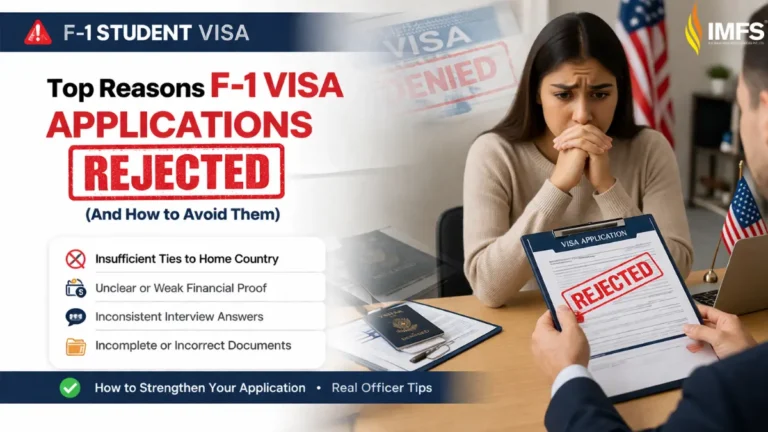
Top Reasons F-1 Visa Applications Get Rejected (And How to Avoid Them)

Visa

Understanding U.S. Student Visa Refusals (2026 Guide)
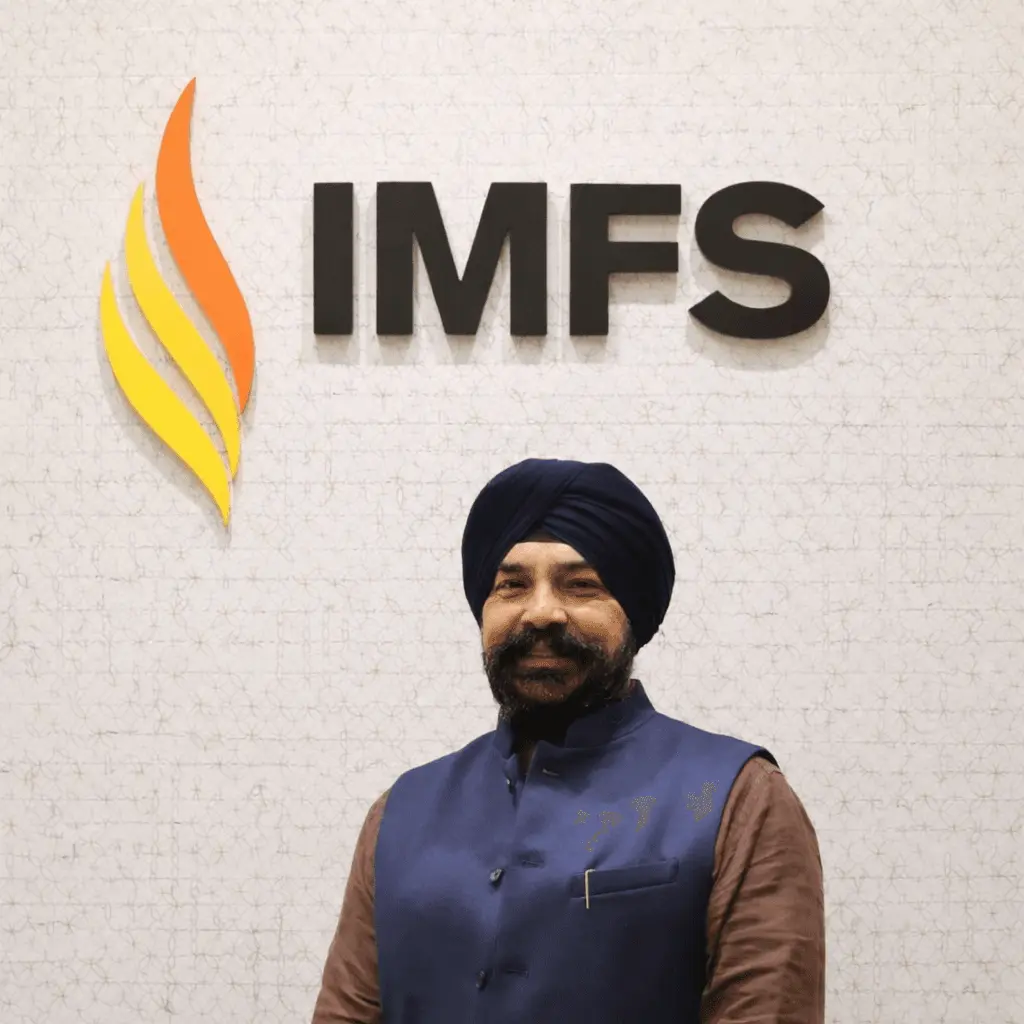
K P Singh
By K. P. Singh
Educationist and Founder, Institute of Management & Foreign Studies (IMFS)
K. P. Singh is an educationist and the founder of IMFS, one of India’s leading study abroad and test preparation institutes. With decades of experience mentoring students for global universities, he has guided thousands of students in building successful international academic careers.
Book a one-on-one counseling session with KP Singh

For many students, the visa interview at the U.S. Embassy or Consulate represents the final step in a long journey. Months of preparation, applications, exams, essays, and admissions culminate in a short conversation that often lasts no more than a few minutes. When the visa is approved, the moment is unforgettable.

But occasionally, the outcome is different.

A visa refusal can be disappointing and confusing, especially when students are unsure why it happened. Yet in most cases, refusals are not random. They occur because the visa officer was not fully convinced about one or more aspects of the student’s application. Understanding these reasons is therefore extremely important.

With the right preparation and clarity, most F-1 visa refusals can be avoided.

In this guide, we will examine the most common reasons why F-1 student visas are refused and how students can prepare effectively to prevent these problems.

Understanding Section 214(b)

Most student visa refusals fall under Section 214(b) of the U.S. Immigration and Nationality Act. This rule states that every applicant for a non-immigrant visa is presumed to be an immigrant unless they can demonstrate otherwise.

In practical terms, the visa officer must be satisfied that the applicant:

  • is a genuine student
  • has sufficient financial resources
  • intends to return home after completing studies
If the officer is not fully convinced on any of these points, the visa may be refused under Section 214(b).

Common Reasons for F-1 Visa Refusal

1. Lack of a Clear Academic Purpose

Students sometimes struggle to explain why they chose their program or university. If the academic path appears inconsistent, the officer may question the seriousness of the application.

  • previous education
  • chosen field of study
  • future career goals
A strong application clearly connects all three elements.

2. Insufficient Financial Evidence

Visa officers must be confident that the student can pay for tuition and living expenses.

  • incomplete financial documents
  • inconsistent bank balances
  • unclear funding sources
Be ready to explain who is financing your education and how funds are available.

3. Weak Understanding of the Chosen Program

Students may struggle to explain their program during the interview, which raises doubts.

  • Why this university?
  • What courses will you study?
  • How does this align with your goals?

4. Poor Visa Interview Preparation

The interview is brief. Nervous or unclear answers can unintentionally create doubt. Preparation means clarity, not memorization.

5. Inconsistent Information

Visa officers cross-check your responses with official documents.

  • DS-160 form
  • I-20 document
  • financial records
Even small discrepancies can affect credibility.

6. Weak Ties to the Home Country

Students must demonstrate non-immigrant intent and plans to return home.

  • family connections
  • career opportunities
  • long-term professional plans

7. Last-Minute Applications

Rushed preparation often leads to incomplete documentation and weak interview performance.

Early preparation significantly improves your chances of approval.

Can Students Reapply After a Visa Refusal?

Yes.

A visa refusal does not permanently prevent a student from applying again. However, before reapplying, students should carefully evaluate what may have caused the refusal and address those issues clearly.

Simply repeating the same application without improvement may lead to the same result. There must be a meaningful change in your profile.

Examples of improvement include adding a new financial sponsor, changing the university or program, or gaining relevant academic or professional experience.

How Students Can Improve Their Chances of Visa Approval

Students who succeed in the visa process typically demonstrate clarity, preparation, and consistency across all aspects of their application.

Clarity of Academic Goals

  • Why they chose their program
  • How the degree supports their career plans

Strong Financial Preparation

Financial documentation clearly shows the ability to cover tuition and living expenses.

Confidence During the Interview

Clear, honest, and composed communication during the interview builds credibility.

Consistency Across Documents

Information in the DS-160, I-20, and supporting documents aligns without contradictions.

Strong applications are not about perfection — they are about clarity, consistency, and credibility.

Preparing for the Entire Visa Journey

The visa interview is only one step in a much larger process.

Students who understand the entire journey — from university admission to arrival in the United States — often feel far more confident during the interview.

If you are preparing for your visa application, these guides will help you at every stage:

Together, these resources provide a complete, step-by-step understanding of the U.S. student visa journey.

A Mentor’s Perspective

For many students, the possibility of a visa refusal creates anxiety. Yet in most cases, refusals are not a reflection of a student’s ability or potential. They simply indicate that the visa officer needed greater clarity or stronger evidence regarding certain aspects of the application.

When students approach the process with preparation, transparency, and confidence, their chances of success increase significantly.

Visa success is rarely about luck — it is about clarity, credibility, and preparation.
Studying abroad is not just about reaching a destination; it is about preparing carefully for the journey. And when preparation meets opportunity, the result is often transformative — the chance to learn in a new environment, explore new ideas, and build a truly global future.

Worried About Your F-1 Visa Interview?

Don’t leave your visa outcome to chance. Get expert guidance on your profile, finances, and interview strategy — so you walk in confident and prepared.

Book a Free Counselling Session

Presented by IMFS — India’s most trusted study abroad guide since 1997

Authored by K. P. Singh
Mentor | Educationist | Founder – IMFS

🌍 Empowering the Global Indian Student

Frequently Asked Questions

Most F-1 visa refusals fall under Section 214(b) because applicants fail to clearly demonstrate that they are genuine non-immigrant students. Visa officers must be convinced about your academic intent, financial capability, and plans to return home after your studies. Even with strong documents, unclear answers or weak explanations during the interview can result in rejection.
Yes, you can reapply immediately. However, reapplying without addressing the reason for rejection often leads to the same outcome. You should first identify what went wrong and improve your profile—whether through stronger finances, better clarity of goals, or improved interview preparation—before applying again.
Strong ties can be demonstrated through family responsibilities, career plans, or future professional opportunities in your home country. Instead of giving generic answers, explain how your U.S. education fits into your long-term plans back home. Visa officers look for clear, logical, and realistic intent.
You should carry bank statements, sponsor letters, income proof (salary slips, tax returns), and loan sanction letters if applicable. All documents must be consistent with your DS-160 and I-20. You should also be able to clearly explain who is funding your education and how the funds are available.
Focus on understanding your own application rather than memorizing answers. Be ready to clearly explain your choice of university, program, and career goals. Practice answering common questions naturally and confidently. Clarity, honesty, and consistency are key to success.

Find Your Nearest IMFS Centre

Mumbai
Dadar
Mumbai
Thane
Mumbai
Borivali
Mumbai
Vashi
Mumbai
Churchgate
Pune
Shivajinagar
Pune
Pimpri
Hyderabad
Kukatpally
Hyderabad
LB Nagar
Hyderabad
Madhapur
Manipal
IMFS Centre
Nellore
IMFS Centre
Warangal
IMFS Centre
author avatar
KP Singh
K P Singh is a distinguished leader in shaping the overseas education landscape in India. With strong ties to universities across North America, Europe, Australia, and New Zealand, as well as collaborations with embassies, educationists, regulators, and banking organizations, he has been a pivotal advocate for students aspiring to study abroad.Mr. Singh has played a transformative role in streamlining visa and application processes, guiding NBFCs to offer education loans, and partnering with universities to create India-specific programs and scholarships. His expertise has made global education more accessible to Indian students. An influential figure in the Indian academic system, Mr. Singh has collaborated with colleges to revise curricula, fostering globally aware students and facilitating partnerships between Indian and foreign institutions.As the Founder and Managing Director of the Institute of Management and Foreign Studies (IMFS), Mr. Singh has propelled IMFS to be India’s premier Test Prep institution, preparing thousands for their journey abroad.Achievements: • 26 Years at IMFS: Supported over 60,000 students in achieving their international education goals. • Recognition: Awarded for educational excellence for three consecutive years; a pioneer in the Test Prep sector. • Education Partnerships: Serves on management committees of several Mumbai colleges.Media & Publications: • TV Appearances: Regular guest on CNBC, sharing insights on global education. • Writer: Contributed to major newspapers, including Times of India and Hindustan Times. • Author: “Comprehensive Guide to Cracking THE GRE.” • Speaker: Delivered over 2000 seminars, including a TEDx talk, inspiring over 150,000 students.Guidance & Mentorship: • GRE Mentorship: Mentored eight students to perfect GRE scores—a national record. • Admissions Success: Guided students to top universities such as Harvard, Columbia, and Purdue.Leadership: • IMFS Growth: As Chief Verbal Faculty and Head Counsellor, built a strong team and set high standards for exam prep. • Global Recognition: Led IMFS to be among the top 7 education companies (PIEoneer Awards). Mr. Singh’s career embodies educational excellence, innovation, and student empowerment, solidifying IMFS’s status as a beacon of success, transforming lives, and fostering futures.
Chat
Get in touch with us Now

You're just one step away from your Dream University!

Avail Free GMAT Test

Avail Free SAT Test