A Practical Guide for U.S. Student Visa Applicants
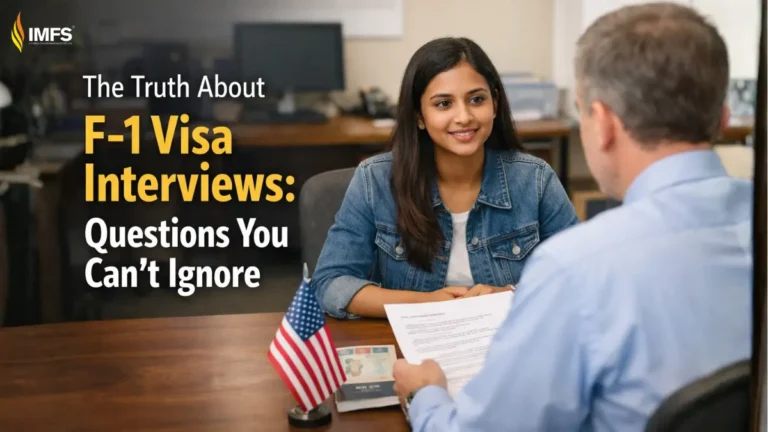
Every year, thousands of students walk into a U.S. Embassy or Consulate for their student visa interview. For most, the interview lasts barely a few minutes. Yet in those few minutes, a visa officer must determine whether the applicant meets the requirements for an F-1 student visa.
Students often imagine the interview as a difficult interrogation filled with trick questions. In reality, the process is far simpler than that.
- Why you want to study in the United States
- Whether you are academically prepared for the program
- Whether you have the financial resources to complete your education
The questions asked during the interview are therefore usually straightforward. What matters is not memorized answers, but clarity, confidence, and honesty.
Understanding the Purpose of the F-1 Visa Interview
Before discussing the questions themselves, it helps to understand what the visa officer is trying to evaluate. Under U.S. immigration law, the officer must determine whether the applicant qualifies as a genuine student with non-immigrant intent.
You can review the official guidelines here: U.S. Department of State – Student Visa Information
- Your academic intent
- Your financial preparedness
- Your long-term plans after completing your education
Question 1: Why Do You Want to Study in the United States?
This is often the first question asked.
- Quality of universities and research
- Access to advanced technology and facilities
- Flexibility of academic programs
- Global exposure and career opportunities
Question 2: Why Did You Choose This University?
- Specific courses in the curriculum
- Faculty research areas
- Laboratories or research centres
- Internship or industry opportunities
Question 3: Why Did You Choose This Field of Study?
- Your academic background
- Your interests and skills
- Your future career goals
Question 4: How Will You Finance Your Education?
- Who is sponsoring your education
- Source of funds
- Coverage of tuition and living expenses
Supporting documents:
- Bank statements
- Education loan approval letters
- Scholarship letters
Question 5: What Do Your Parents Do?
- Profession or occupation
- Employer or business
- Approximate income (if relevant)
Question 6: Do You Plan to Work in the United States After Graduation?
Students may work temporarily through Optional Practical Training (OPT) .
Question 7: Have You Been to the United States Before?
- Purpose of travel
- Duration of stay
- Compliance with visa rules
Question 8: What Are Your Career Plans After Graduation?
- Your chosen degree
- Industry opportunities
- Long-term professional goals
Question 9: Why Not Study in Your Home Country?
- Specialized programs not available locally
- Advanced research facilities
- Global exposure
Question 10: When Does Your Program Start?
Make sure you have carefully reviewed your documents. Read more about the I-20 process here: How to Get Your I-20 Form
Tips for a Successful Visa Interview
Visa interviews are brief. Avoid long, complicated explanations.
Keep all required documents neatly arranged and easily accessible.
- Passport
- I-20 form
- Financial proof
- Admission letter
Visa officers value clarity, confidence, and sincerity over rehearsed answers.
Be fully aware of your:
- Program details
- Funding sources
- Career goals
The Complete U.S. Student Visa Process (2026 Guide)
A Mentor’s Perspective
For many students, the visa interview can feel intimidating simply because it represents the final step before departure. In reality, it is not a test of memorisation or perfect answers.
The visa officer is not trying to trap you. They are trying to understand whether you are a genuine student with a clear academic purpose and the ability to complete your education successfully.
Students who approach the interview with calmness, honesty, and clarity often discover that the experience is far less stressful than they had imagined.
Months of preparation turn into a boarding pass, a new campus, and the beginning of a truly global education.
Your U.S. Visa Interview Should Not Be a Guessing Game
Get personalised guidance, mock interview training, and expert support to approach your F-1 visa interview with clarity and confidence.
Book Your 1-on-1 Counselling Session🌍 Empowering the Global Indian Student
- Why do you want to study in the United States?
- Why did you choose this university and course?
- How will you finance your education?
- What are your plans after graduation?
- Why not study in your home country?
- Focus on your academic journey and career goals
- Speak in clear, simple sentences
- Keep answers direct and relevant
- Be honest instead of guessing
- Valid passport
- I-20 form
- Visa appointment confirmation
- SEVIS fee receipt
- Admission letter
- Financial documents
- Academic transcripts and test scores
- Up to 12 months of work authorization
- STEM extension up to 24 additional months
- Unclear academic goals
- Inconsistent answers
- Weak financial proof
- No clear post-study plan
- Poor communication or lack of confidence
Find Your Nearest IMFS Centre