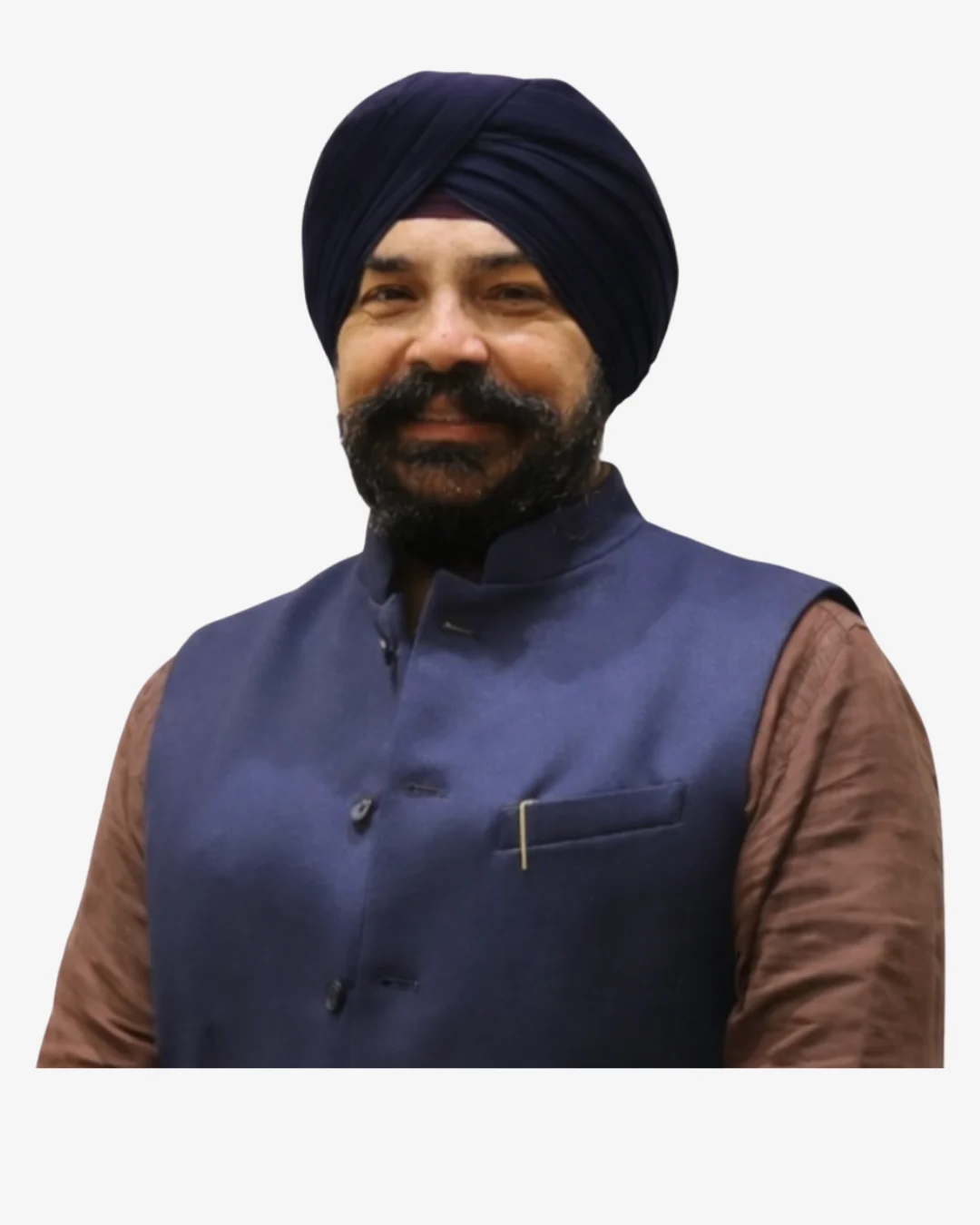
Authored by K. P. Singh | Mentor · Educationist · Founder – IMFS
When Borders Blur and Minds Meet: How AI, Global Collaboration, and Hackathons Are Redefining Education
The world did not change overnight; it evolved, quietly at first, then all at once. Artificial Intelligence has accelerated that change in ways few industries, including education, were truly prepared for. Knowledge is no longer scarce. Information is no longer power. What matters now is how effectively that knowledge is applied, how ideas are executed, and how people collaborate across borders to solve real problems.
In this new reality, education cannot remain local in its thinking. The future belongs to institutions and students who think globally, collaborate openly, and act decisively.
This is why collaborations between educational institutions across continents matter more today than ever before. They signal a shift from isolated learning to shared innovation, from static curricula to dynamic problem-solving ecosystems. A powerful example of this evolving mindset is the collaboration between SUNY Binghamton (New York) and Sardar Patel Institute of Technology (Mumbai), which begins not with ceremonial agreements but with action, through a Hackathon.
AI and the New Grammar of Global Education
AI does not recognise national boundaries. A problem in healthcare analytics, climate modelling, cybersecurity, or smart infrastructure is inherently global. Solving such problems requires diverse perspectives, cross-cultural collaboration, and the ability to work in distributed teams.
When institutions across the proverbial seven seas, like SUNY Binghamton and SPIT, come together, they create something far more valuable than a joint event. They create a shared academic and innovation culture, one where students learn to think beyond geography, adapt to global standards, and collaborate with peers who approach problems differently.
Launching this collaboration through a Hackathon is both symbolic and strategic. Hackathons represent the most honest form of learning in the AI era. There are no scripted answers, no fixed outcomes, only a problem, a deadline, and a team that must figure things out. That is exactly how the real world works.
Why Hackathons Matter in the Age of AI
Hackathons are often misunderstood as coding marathons. In reality, they are compressed simulations of professional life.
A well-designed Hackathon pushes students to:
- Understand and define a problem clearly
- Ideate feasible solutions under constraints
- Divide responsibilities within a team
- Build, test, fail, iterate, and present
- Communicate ideas clearly to diverse audiences
In the process, students learn far more than technical skills. They learn decision-making under pressure, collaboration across personalities, leadership without authority, and resilience when things don't work the first time. In an AI-driven world where tools evolve rapidly, these human capabilities are what set professionals and future leaders apart.
What Judges Actually Score — And Why It Mirrors What Admissions Committees Look For
Most hackathon judging rubrics score four things — and each one maps onto a line an SOP reviewer is grading too:
Did the team understand what they were solving? Does the build actually work? Is the approach genuinely different? Can the team explain it to someone outside the room in two minutes? A hackathon is, in effect, a dry run for the exact skill an SOP demands.
Hackathons as Serious Profile Builders (Not Just Events)
For years, I have advised students aspiring to study at top global universities. One truth has remained constant: admissions committees and recruiters are no longer impressed by claims; they look for proof.
Hackathons provide that proof.
A meaningful Hackathon experience, when articulated correctly, can significantly strengthen a student's profile across multiple dimensions:
- It adds substance to the resume
- It creates real, demonstrable work for GitHub
- It provides concrete stories for the SOP
- It gives recommenders something authentic to write about
However, participation alone is not enough. The real value emerges when students learn to translate their work into a compelling narrative. I have written in detail about how to build an impactful resume for MS admissions, where projects, leadership, and outcomes matter far more than generic skill lists: The Ideal Resume and Resume Drafting Guide for MS Aspirants.
Beyond Coding: What Hackathons Actually Reveal
There is a persistent myth that hackathons favour only the best programmers. In reality, the most successful teams are rarely those with the strongest individual coders; they are those with balanced teams. Hackathons reveal who can:
- Conceptualise ideas clearly
- Organise tasks efficiently
- Communicate across disciplines
- Lead when uncertainty is high
- Motivate teammates when fatigue sets in
These are precisely the qualities that global universities and employers seek today. Technical skills may get students shortlisted, but teamwork, leadership, and clarity of thought are what set profiles apart.
Common Mistakes Students Make When Presenting Hackathon Experience
- Listing the event, not the outcome. "Participated in a hackathon" tells an admissions officer nothing. "Built a triage tool that cut manual sorting time for a 3-person team" tells them everything.
- Burying a non-coding role. If you led the pitch, scoped the problem, or managed the team, say so explicitly — that is not a lesser contribution, and it directly answers a different question on the reviewer's checklist (leadership) than the coding does (technical skill).
- Leaving it undocumented. A hackathon project that lives only in someone's memory a year later is a missed opportunity. A short GitHub README, written the week of the event, is worth more than a polished paragraph written from memory months later.
- Treating it as a standalone line item. The same project should show up, worded slightly differently, in your resume, your SOP, and ideally in what your recommender writes about you. Consistency across all three is what makes the story credible.
Your next question is probably: "Do I need to already be a strong coder to make a hackathon like this work for me?"
Not at all. The strongest hackathon teams are usually mixed — a couple of technical builders paired with people who can frame the problem, manage the timeline, and pitch the result. We've broken down exactly how non-technical contributions still strengthen an MS profile in Hackathons and the Making of a Strong Graduate School Profile.
What Top Universities Are Really Looking For
There is a noticeable shift in how leading universities evaluate applicants. Grades and test scores remain important, but they are no longer sufficient on their own.
Increasingly, admissions committees are asking deeper questions:
- Can this student apply knowledge meaningfully?
- Have they worked in teams?
- Do they show initiative and intellectual curiosity?
- Have they demonstrated growth over time?
I have written earlier about what it truly takes to gain admission to a high-ranked university and why holistic, experience-driven profiles now carry far greater weight than isolated academic metrics: How Does One Get Admission to a High-Ranked University?
This is not a subjective impression on my part. IMFS's own admissions-intelligence data shows the gap between an average application and a shortlisted one widening year over year, which is exactly why experience-based signals like hackathon participation increasingly separate one candidate from another with near-identical grades. A full breakdown of this trend is available at the IMFS Insights page on the admissions competitiveness gap. (Source: IMFS Insights Team. IMFS Admissions Intelligence Dataset (v2026.1). IMFS, June 2026. Available at: https://www.imfs.co.in/insights/)
Hackathons, especially those conducted through global collaborations, naturally answer many of these questions.
Which Student Profile Suits Hackathon-Led Profile Building — And Which Suits Research-Led?
Your right answer depends on your specific profile, target programs, and timeline — not just which sounds more impressive.
Hackathon-Led Profile Building
TYPICAL COMMITMENT: 24–48 HRS- Applying mainly to MS/STEM or MBA programs that value applied, shipped projects over pure theory
- Working with limited research or publication opportunities at your current college
- Comfortable in fast, unstructured team settings under a tight deadline
- Looking for a GitHub-verifiable, recruiter-visible credential rather than a description alone
- Not the right fit if your target program is a research-heavy PhD track, where sustained lab work and faculty fit matter more than a short build
Research/Publication-Led Profile Building
TYPICAL COMMITMENT: 3–6 MONTHS- Targeting PhD or research-intensive MS programs where faculty fit and lab exposure carry real weight
- Able to commit months, not days, to a sustained project under a mentor or professor
- Aiming at departments and reviewers who weight publications and lab experience heavily
- Already have, or can build, a working relationship with a professor willing to supervise or co-author
- Not the right fit if you need a fast, portfolio-ready credential this cycle — a hackathon delivers that in days, a publication almost never does
If your primary constraint is cost, a hackathon is close to the highest-ROI activity available to you — no coaching fees, no application cost, only your time and effort.
If your goal is permanent residency, treat the hackathon output as a portfolio piece for the employer-facing job search that follows graduation in PR-pathway countries like Canada or Australia — a working project reads better to a hiring manager than a certificate does.
If university ranking and starting salary are your top priorities, a named collaboration like the SUNY Binghamton–SPIT hackathon is exactly the kind of differentiator that separates two otherwise similar applications at a selective program.
If visa certainty and job market stability matter most to you, documented, verifiable project work lowers the risk in your application by giving admissions committees and recruiters proof, not just a claim.
The Bigger Signal Behind This Collaboration
The SUNY Binghamton–SPIT collaboration reflects a broader global shift.
Indian institutions are no longer viewed merely as talent suppliers. They are increasingly recognised as innovation partners. Global universities, in turn, are seeking students who are not just academically capable but also globally ready. Students who participate in such collaborative ecosystems gain more than exposure. They gain direction, confidence, and clarity, qualities that shape long-term success. Preparing for international education also involves cultural and professional maturity, a theme I have discussed earlier while writing about how students can truly thrive abroad, both inside and outside the classroom: Thriving Abroad: A Guide for International Students.
Your next question is probably: "Once I've built this experience, how do I make sure it actually lands with an admissions committee?"
The hackathon itself is only half the work — the other half is translating it into a resume line, an SOP paragraph, and a recommender's letter that all tell the same story. Our Resume Drafting Guide for MS Aspirants walks through that translation step by step.
Frequently Asked Questions
Do I need a computer science background to benefit from a hackathon like the SUNY Binghamton–SPIT collaboration?
No. Hackathon teams need people who can define the problem, structure the pitch, and communicate the result — not only people who write the code. For a full breakdown of how non-technical contributions still strengthen an MS profile, see: Hackathons and the Making of a Strong Graduate School Profile.
How do I turn a hackathon project into material for my SOP and resume?
Document the problem you solved, your specific role, and one measurable outcome — then reuse that same language, worded slightly differently, across your resume and SOP. For the exact structure to follow, see: Resume Drafting Guide for MS Aspirants.
Where can I check if my GRE score or GPA is competitive before I invest time building a hackathon-led profile?
Run your numbers through IMFS's free tools to see where you stand against real admit data before you invest time in extracurricular profile-building: GRE Percentile Calculator or the University Recommender.
A Final Thought
The future will not ask students where they studied. It will ask what they built, how they worked with others, and what they learned from failure. Hackathons answer those questions. Global collaborations amplify their impact. Students who recognise this early do not merely adapt to the future; they help shape it.
Presented by IMFS — India's study abroad guide since 1997
Authored by K. P. Singh
K. P. Singh has guided thousands of students across the United States, United Kingdom, Canada, Australia, and Europe.
His work focuses on structured admissions strategy, long-term academic positioning, and aligning student ambition with institutional expectations.
Strong Applications Are Structured, Not Accidental
In competitive admission cycles, clarity of direction and credibility of profile often determine outcomes. A structured admissions strategy strengthens positioning across resumes, SOPs, LORs, and university selection.