From Placement to Purpose:
Why the TPO Is the Most Powerful Office in Modern Education
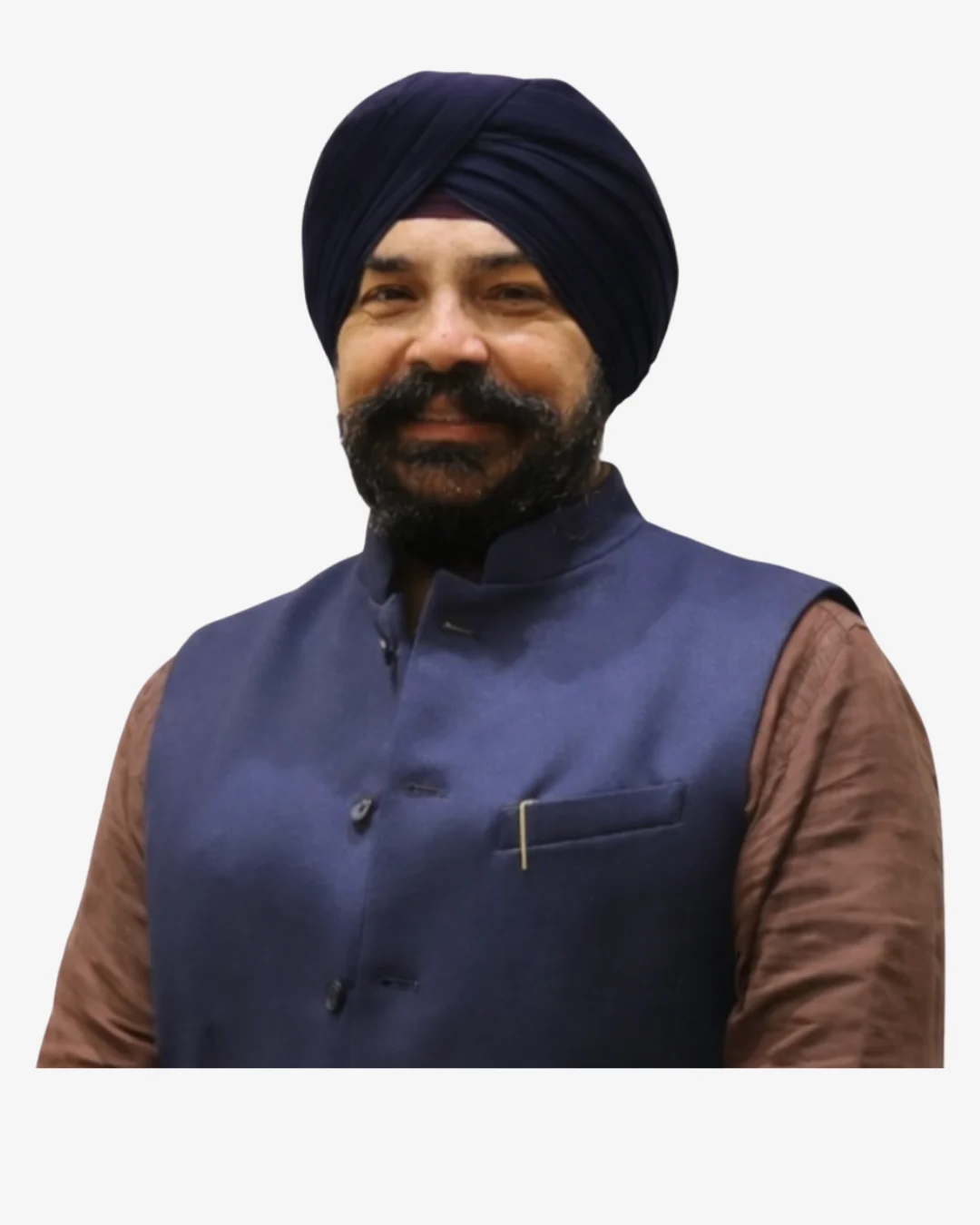
Authored by K. P. Singh — Mentor | Educationist | Founder, IMFS
The Training and Placement Officer was once defined by three numbers: companies visited, offers made, percentage placed. K. P. Singh — Founder of IMFS and mentor to over 67,000 students — argues that this model is no longer sufficient. This article makes the case for a fundamental reimagining of the TPO role: from placement administrator to career architect.
📌 Source: India Skills Report | This is an alignment problem — not a demand problem.
A placement is an outcome. A career is a journey. And for too long, Indian higher education has been optimising for the first while neglecting the second.
That gap — between where students land and where they need to go — is exactly where the TPO must now operate. Not as an administrator of processes, but as an architect of what comes after.
The Reality We Can No Longer Ignore
The data makes the problem impossible to dismiss.
According to the India Skills Report, nearly 85% of engineering graduates and 74% of management graduates remain unplaced — even as 88% of employers report active hiring. That is not a demand problem. It is an alignment problem. Students are learning, industries are hiring, and the two are not meeting.
Employers consistently flag the same gaps: limited practical exposure, poor workplace readiness, and weak professional skills. Internships, once treated as optional résumé fillers, have become the primary filters through which hiring decisions are made — yet access to structured, mentored internships remains inconsistent across institutions.
Perhaps most telling: only a fraction of students genuinely understand how hiring works. This is not a skills gap alone. It is a career navigation gap. And in the space between those two failures stands one office — often underestimated, chronically underutilised — the TPO.
The Career Architect
The modern TPO cannot remain a coordinator of placement drives. That version of the role belongs to a different era.
Today's students are not short on ambition or information. They are overwhelmed by both. Without structured guidance, they drift toward trends, toward peer pressure, toward choices that may not sustain them five years out. A strong TPO office gives them something more valuable than a shortlist of recruiters: it gives them clarity about who they are and where they fit.
That requires a fundamentally different posture — less process manager, more career intelligence engine.
Helping students find their direction since 1997
For students exploring higher education abroad — undergraduate, postgraduate, or doctoral pathways — IMFS offers personalised counselling at 13 branches across India.
What a Future-Ready TPO Office Must Do
1. Build Career Intelligence, Not Just Placement Pipelines
The TPO must become the institution's window into the working world — interpreting emerging industry trends, mapping new roles and the skills they demand, and helping students understand where they genuinely fit rather than where they assume they should go.
This is not about giving answers. It is about enabling informed decisions. Clarity, once established, changes a student's entire trajectory.
2. Bring Industry Back into the Classroom
The most effective TPOs do not wait for recruiters to arrive on campus. They go out and ask the harder questions — what skills are companies struggling to find, where are recent graduates falling short, which capabilities are becoming obsolete. Then they return to campus and act on what they learn: working with faculty, influencing curriculum direction, introducing certifications that reflect where the industry is actually heading.
True alignment begins here. Placing students who are not prepared is not a success — it is a delayed failure, for the student and for the institution's reputation.
3. Design Structured Internship Ecosystems
A meaningful internship is not three months of attendance. It is a designed experience with a clear progression — from exploration, through skill-building, to specialisation — supported by mentorship and followed by genuine reflection.
Handled well, internships do something no classroom module can: they reduce confusion and accelerate direction. They do not just fill a section of a résumé. They answer the question that most students cannot yet articulate — what kind of work do I actually want to do?
4. Teach the Invisible Curriculum
There is a silent gap between what students know and what the workplace expects. Employers assess communication, professional conduct, problem-solving under pressure, and the ability to adapt — none of which appear on a transcript. These are not soft skills. They are the skills that determine whether a student merely enters an industry or builds a career within it.
A future-ready TPO embeds this curriculum through simulations, real-world problem-solving, and interdisciplinary collaboration. Knowledge may open the door. Behaviour determines how long it stays open.
5. Create Multiple Pathways, Not a Single Outcome
Not every student should be pushed toward campus placements. A mature TPO office recognises this and builds accordingly — supporting students who are headed toward higher education in India or abroad, those exploring entrepreneurship or family business innovation, and those building portfolio careers through freelancing or independent practice.
Explore MS Counselling → | UG Counselling → | PhD Counselling →
Guidance, at its core, is about alignment, not standardisation. The TPO's job is to help each student find the right path, not to funnel everyone through the same one.
6. Build Long-Term Industry Partnerships
Industry engagement must move beyond recruitment drives and annual panels. The institutions that produce consistently employable graduates are the ones where industry is a genuine stakeholder — contributing to advisory boards, co-creating programs, providing live project briefs, and offering continuous feedback on what is and is not working.
When companies are collaborators rather than visitors, employability improves naturally — and the relationship compounds over time.
7. Track Success Beyond Placement Day
A visionary TPO tracks career growth, role transitions, and long-term alumni trajectories — not because it looks good in a brochure, but because that data is the only honest feedback loop an institution has. It reveals what the curriculum prepared students for and what it did not. It shows which industry partnerships are producing real outcomes and which are ceremonial.
Education proves its value over time, not at the point of exit.
The Most Strategic Office on Campus
The TPO stands between two contrasting worlds. On one side: academia, structured, methodical, operating on academic cycles. On the other: industry, dynamic, demanding, and unforgiving of graduates who arrive unprepared.
Bridging that divide requires more than scheduling and coordination. It requires institutional insight, industry fluency, empathy for students at a genuinely uncertain moment in their lives, and an unflinching commitment to outcomes that go beyond the placement report.
Institutions that empower their TPO offices with this mandate do not just achieve better placement numbers. They build stronger reputations, more confident graduates, and alumni who remain relevant — and grateful — a decade later.
Those that do not will continue to produce graduates. Just not necessarily professionals.
A Call to Rise
This is a defining moment for higher education in India. The gap has been identified. The data is clear. The consequences are visible in every placement report that celebrates percentages while ignoring trajectories.
To every institution: investing in your TPO office is not an operational decision. It is a declaration of what you believe education is for.
The world has changed. It is time the TPO did too — not incrementally, but decisively.
IMFS — Trusted by Students & Families Across India
Continue Reading
Frequently Asked Questions
The modern Training and Placement Officer (TPO) must go beyond coordinating placement drives. Today's TPO must function as a career intelligence engine — interpreting industry trends, mapping new roles, guiding students toward informed decisions, and bridging the gap between academic preparation and workplace readiness.
According to the India Skills Report, nearly 85% of engineering graduates and 74% of management graduates remain unplaced even as 88% of employers report active hiring. This is not a demand problem — it is an alignment problem. Employers flag limited practical exposure, poor workplace readiness, and weak professional skills as the primary reasons graduates do not meet hiring criteria.
A future-ready TPO office should: build career intelligence (not just placement pipelines), bring industry into the curriculum, design structured internship ecosystems with mentorship, teach the invisible curriculum of professional conduct and communication, create multiple career pathways, build genuine long-term industry partnerships, and track student success well beyond placement day.
The invisible curriculum refers to skills that do not appear on transcripts but determine career success: communication, professional conduct, problem-solving under pressure, and the ability to adapt. Employers use these as primary filters. A future-ready TPO embeds this through simulations, real-world problem-solving, and interdisciplinary collaboration.
Industry engagement must move beyond annual placement drives and recruitment panels. Effective TPO offices make industry a genuine stakeholder — contributing to advisory boards, co-creating programmes, providing live project briefs, and giving continuous feedback on graduate readiness. When companies are collaborators rather than visitors, employability improves naturally and the relationship compounds over time.
No. A mature TPO office recognises that not every student should be pushed toward campus placements. It should build multiple pathways — supporting students headed toward higher education in India or abroad, those exploring entrepreneurship or family business innovation, and those building portfolio careers. Guidance is about alignment, not standardisation.
Placement day is not the measure — Day 1000 is. A visionary TPO office tracks career growth, role transitions, and long-term alumni trajectories. This is the only honest feedback loop an institution has: it reveals what the curriculum prepared students for, which industry partnerships produce real outcomes, and where the institution must improve. Education proves its value over time, not at the point of exit.
The TPO stands between academia and industry — two worlds operating on fundamentally different timelines and demands. Bridging that divide requires institutional insight, industry fluency, and empathy for students at an uncertain moment in their lives. Institutions that empower their TPO offices with a broad, decisive mandate produce stronger reputations, more confident graduates, and alumni who remain relevant a decade later.
Talk to an IMFS Consultant — Free
27+ years of placing students at 280+ global universities. No fees. No pressure. Just honest, personalised guidance.
View all branch addresses → | Study in USA | Study in UK | Study in Germany | Study in Canada | Study in Ireland
© IMFS — Indian Management & Foreign Studies, 1997–2026. All rights reserved. | www.imfs.co.in