Study in Australia: The Complete 2026–27 Guide and Visa Rules for Indian Students
Australia's student visa framework changed significantly in 2024–26 — the Genuine Temporary Entrant statement is gone, replaced by the Genuine Student requirement, and both the Subclass 500 and Subclass 485 visa fees have risen. This guide covers universities, costs, the current visa process, and PR pathways exactly as they stand today.
Here is what makes Australia stand apart for Indian students in 2026:
- 9 universities in the global QS top 100 (QS World University Rankings 2026) — among the strongest showings of any country besides the USA and UK
- A Temporary Graduate visa (subclass 485) giving eligible graduates 2 to 4 years of largely unrestricted work rights, depending on qualification level
- One of the more structured PR pathways among major destinations, through the points-tested skilled migration programme
- A large, established Indian-origin community across every major city
- English-speaking — no language adjustment beyond accent
- Ongoing demand for skilled workers in IT, healthcare, engineering, and trades
- Three intake windows per year — February, July, and November — giving Indian students multiple entry points
Australia is not the cheapest destination, and visa and post-study visa fees have both risen substantially in 2025–26. But work rights during study, graduate earning potential, and PR opportunity still make it one of the higher-ROI study destinations for the right profile.
Part 1: The Australian Education System
Australia's higher education system is practical, research-driven, and internationally recognised. Key features Indian students appreciate:
- Application-based learning — presentations, case studies, group projects, and lab work form the backbone of teaching, not rote memorisation
- Flexible course structure — students can choose electives and shape their academic path
- Strong industry connections — most universities have embedded internship and placement programmes
- CRICOS registration — every institution offering courses to international students must be registered with the Commonwealth Register of Institutions and Courses for Overseas Students (CRICOS); a course that isn't CRICOS-registered cannot support a student visa
Degrees from Australian universities are recognised by employers and institutions across the Commonwealth, the USA, Europe, and Asia.
Part 2: Best Universities in Australia for Indian Students
Per the QS World University Rankings 2026, nine Australian universities sit in the global top 100 — the same count as the previous year, reflecting overall stability even as individual rankings shifted:
| University | Location | QS 2026 Global Rank | Strengths |
|---|---|---|---|
| University of Melbourne | Melbourne | 19 | Law, medicine, arts, science |
| UNSW Sydney | Sydney | 20 | Engineering, business, law |
| University of Sydney | Sydney | 25 | Business, engineering, medicine |
| Australian National University | Canberra | 32 | Research, policy, international relations |
| Monash University | Melbourne | 36 | Pharmacy, medicine, engineering |
| University of Queensland | Brisbane | 42 | Life sciences, sustainability, business |
| University of Western Australia | Perth | 77 | Mining, resources, marine sciences |
| University of Adelaide | Adelaide | 82 | Engineering, agriculture — regional PR advantage |
| University of Technology Sydney | Sydney | 96 | Technology, design, business |
Beyond the top 100, universities like Macquarie, RMIT, Deakin, Curtin, Wollongong, QUT, and La Trobe rank in the global top 250 and are particularly popular with Indian students for their placement records and regional campuses.
→ Read more: Best Universities in Australia for International Students
💡 Your next question is probably
"What IELTS score do these universities actually expect?"
Most Australian postgraduate programmes don't require the GRE at all — IELTS is the more common gatekeeper, and requirements typically sit in the 6.0–7.0 range depending on the course and institution.
See IMFS Insights: IELTS score benchmarks for study abroad →Part 3: Cost of Studying in Australia
Tuition Fees
| Degree Level | Annual Tuition (AUD) |
|---|---|
| Bachelor's | 20,000 – 45,000 |
| Master's by Coursework | 22,000 – 50,000 |
| Master's by Research | 18,000 – 42,000 |
| PhD | 18,000 – 42,000 (many are fully funded) |
These are indicative ranges only. Confirm the exact figure on each university's own admissions page before budgeting, since fees are revised annually.
Living Costs
Australian living costs vary significantly by city. A realistic monthly budget for most students is AUD 1,800–3,000/month, covering accommodation, food, transport, health insurance, and personal expenses — though this should be checked against the Department of Home Affairs' current financial-capacity benchmark for your visa application (see Part 4).
- Sydney and Melbourne sit at the higher end (AUD 2,200–3,000)
- Brisbane, Adelaide, and Perth are mid-range (AUD 1,800–2,400)
- Regional cities and towns are the most affordable (AUD 1,400–1,800)
→ Full breakdown: Cost of Studying in Australia for Indian Students
→ Hidden costs: Top Hidden Costs of Studying in Australia and How to Save Money
Scholarships for Indian Students in Australia
- Australia Awards — fully funded, Government of Australia, highly competitive
- Monash International Merit Scholarship — partial tuition reduction, renewable
- Macquarie University India Scholarship — for UG and PG Indian applicants
- UNSW Future of Change Scholarship — tuition fee reductions
- ANU Chancellor's International Scholarship — for high-achieving international students
- Destination Australia — government-funded scholarships specifically for regional study
→ Full guide: Scholarships for Studying Abroad
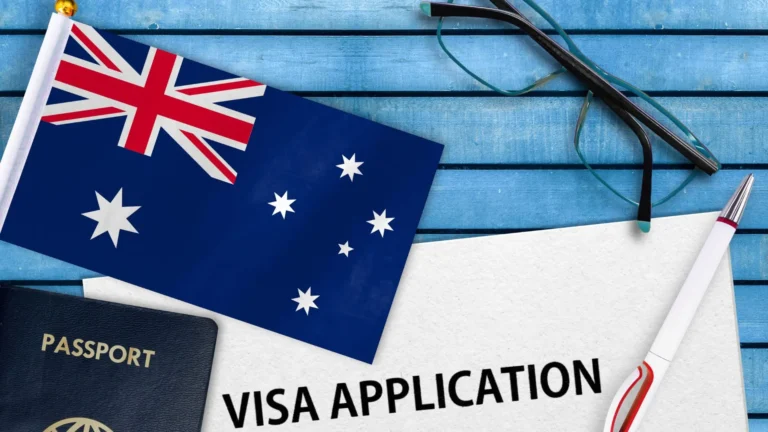
Part 4: The Australian Student Visa (Subclass 500) — Requirements & Step-by-Step Process
4.1 What changed: GS has replaced GTE
If you've researched this visa before, you may have come across the "Genuine Temporary Entrant" (GTE) statement. That has been retired. Since 23 March 2024, applicants must instead satisfy the Genuine Student (GS) requirement — a similar underlying intent, but now assessed directly through structured questions in the online visa application form rather than a separate written statement. A generic, templated answer that doesn't reflect your actual academic and financial circumstances is one of the most common reasons the GS assessment fails.
4.2 Core eligibility requirements
- A Confirmation of Enrolment (CoE) from a CRICOS-registered institution, for a course you've accepted and (usually) paid a deposit toward
- Satisfying the Genuine Student (GS) requirement
- English language proficiency — IELTS, PTE Academic, or TOEFL iBT scores meeting your institution's and the visa's minimum, commonly in the 5.5–7.0 band range depending on course level
- Financial capacity — evidence you can cover living costs, tuition, and return travel for the first 12 months. This benchmark is set and periodically revised by the Department of Home Affairs; confirm the exact current figure at immi.homeaffairs.gov.au before relying on any number, including any quoted elsewhere in this guide
- Overseas Student Health Cover (OSHC) — mandatory for the full duration of your visa
- Health examination from an approved Australian panel physician, and character requirements (police clearance may be required)
4.3 Step-by-step: how to actually apply
Shortlist and apply to a CRICOS-registered course
Confirm the institution and course appear on the CRICOS register before applying — a non-CRICOS course cannot support a Subclass 500 application.
Accept your offer and receive your Confirmation of Enrolment (CoE)
Once you accept the offer and pay any required deposit, the institution issues your CoE. This is a mandatory document — an application without one is treated as invalid.
Create an ImmiAccount
ImmiAccount is the Department of Home Affairs' online portal for lodging and tracking your visa application. Keep your login secure — you'll return to it repeatedly through the process.
Complete the online application, including your GS response
Fill in the Subclass 500 form carefully, including the Genuine Student questions. Answer with specifics about your background, your course choice, and your plans — vague or copy-pasted answers are a leading cause of refusal.
Gather and attach supporting documents
Passport, CoE, academic transcripts and qualifications, English test results, evidence of financial capacity, OSHC policy details, and a recent passport-style photo. The Department can request additional documents on a case-by-case basis, so check ImmiAccount regularly for requests.
Pay the visa application charge
The charge is set by the Department of Home Affairs and reviewed periodically — confirm the current amount using the Visa Pricing Estimator before paying, as it changes on a schedule (most recently from 1 July 2026). It is non-refundable regardless of outcome.
Complete health examination and biometrics if requested
Not every applicant is asked to attend an interview, but you may be required to complete a health examination or provide biometrics. If you can't complete these within the given window, attach evidence of the steps you've taken via ImmiAccount rather than letting the deadline lapse silently.
Track your application and respond to requests promptly
Processing times vary by country of application, education sector, and how complete your application is. Check the Department's current global processing times rather than relying on a fixed week count — this figure moves.
Visa grant and next steps
Read your grant notice carefully for your visa conditions, including work-hour limits and course-progression requirements, before you travel.
4.4 Work rights on the student visa
- 48 hours per fortnight during study term, including exam periods (Condition 8105)
- Unlimited hours during scheduled university breaks
- Students in a Master's by Research or Doctoral programme have no work-hour limit once their course has started
Work-hour conditions are set by the Department of Home Affairs and can change — confirm your specific conditions on the VEVO system before relying on this summary.
4.5 Common reasons applications are refused
- A generic or templated Genuine Student response that doesn't reflect your individual circumstances, or a course choice inconsistent with your academic background
- Financial evidence that is incomplete, unclear, or doesn't show a plausible, well-documented source of funds
- Incomplete or inaccurate information anywhere on the application form
- Not meeting health or character requirements, or failing to disclose relevant history
- Missing the CoE at the time of application for onshore applicants — this now makes an application invalid outright
Part 5: Australia Intakes — When to Apply
| Intake | Start Month | Typical Deadline | Best For |
|---|---|---|---|
| Semester 1 | February | Oct–Nov prior year | Most popular, widest course choice |
| Semester 2 | July | April–May same year | Aligns well with the Indian academic calendar |
| Trimester 3 | November | Aug–Sep | Limited programmes, some universities only |
For Indian students completing 12th or graduation in May–June, the July intake is the natural fit. The February intake requires earlier planning but gives access to the most courses.
Part 6: Post-Study Work Rights — Temporary Graduate Visa (Subclass 485)
This is where Australia's rules have shifted the most since 2024. The Temporary Graduate visa (Subclass 485), mainly under the Post-Higher Education Work stream, lets eligible graduates live and work in Australia without employer or occupation restrictions after completing their degree — but eligibility, cost, and duration have all tightened.
What's changed
- Age limit: reduced to 35 years or under at the time of lodgement for most applicants (down from the previous 50). Exceptions up to age 49 apply to Master's-by-Research and Doctoral graduates, and to Hong Kong/British National (Overseas) passport holders
- Visa application charge: AUD 5,750 for the primary applicant, effective from 1 July 2026 — verify the current figure on the Department of Home Affairs fee schedule, as it is reviewed on a similar annual cycle
- English test validity: your test result must now come from a single in-centre sitting taken within 12 months of lodging your 485 application
- Visa durations, under current rules:
| Qualification | Standard Duration |
|---|---|
| Bachelor's degree (including Honours) | 2 years |
| Master's by Coursework | 2 years |
| Master's by Research | 3 years |
| Doctoral degree | 4 years |
Regional study still matters for extending your stay — but rather than a single, longer initial grant, it now typically works through a separate additional (second) Subclass 485 application tied to studying and living in a designated regional area. Confirm the current regional-extension pathway and eligibility on the Department of Home Affairs website, as this mechanism has changed more than once since 2024.
You must apply within 6 months of your course completion date and be onshore in Australia at the time of application — missing this window invalidates the application with no exceptions.
→ Step-by-step visa process: Australian Student Visa: Step-by-Step Guide
💡 Your next question is probably
"Does regional study still give me extra time in Australia?"
Yes, but the mechanism changed — regional study/work now typically extends your stay through a separate additional Subclass 485 application rather than a longer initial grant. Confirm your specific pathway against the current Home Affairs regional-visa rules before choosing a campus on the strength of this alone.
Check current regional post-study work provisions on the Department of Home Affairs site →Part 7: Jobs & Careers in Australia After Graduation
- Information Technology — software engineers, data analysts, cloud architects, cybersecurity specialists
- Healthcare & Nursing — ongoing shortage, direct PR pathway
- Engineering — civil, structural, mechanical, electrical
- Accounting & Finance — Big 4 firms, banking, financial services
- Education — teaching, early childhood (ECE), TESOL
- Construction & Trades — particularly in regional and infrastructure projects
Part 8: PR Pathway — Staying in Australia After Graduation
Australia's skilled migration system awards points based on age, qualification, English proficiency, work experience, and state nomination:
| Visa | Route | Legislative Minimum |
|---|---|---|
| Subclass 189 | Skilled Independent (no state sponsor needed) | 65 points |
| Subclass 190 | Skilled Nominated (state/territory nominates you) | 65 points + nomination |
| Subclass 491 | Skilled Work Regional (regional state/territory nominates you) | 65 points + nomination |
65 points is the floor to submit an Expression of Interest, not a realistic invitation guarantee. Reported 2026 invitation rounds show some occupations clearing at the 65-point minimum, while oversubscribed fields — particularly ICT, engineering, and professional services, where Indian applicants are heavily represented — have needed effective scores well above that, commonly cited in the 75–95+ range. Check the Department's own SkillSelect invitation-round results for your specific occupation before assuming any single number applies to you.
Courses aligned with the Medium and Long-term Strategic Skills List (MLTSSL) — nursing, engineering, IT, accounting — continue to have clearer PR pathways, and studying or working in a designated regional area still earns bonus points toward these visas.
Points thresholds, occupation lists, and invitation-round schedules are reviewed periodically by the Department of Home Affairs and via SkillSelect — treat the figures above as a starting reference, not a guarantee, and confirm current values before making a decision.
Part 9: Best Cities in Australia for Indian Students
| City | Best For | Indicative Rent /wk (AUD) |
|---|---|---|
| Sydney | Finance, tech, global HQs | 300–500 |
| Melbourne | Education, arts, diversity | 250–420 |
| Brisbane | Growing tech, sunshine | 200–350 |
| Perth | Mining, resources, lifestyle | 180–320 |
| Adelaide | Healthcare, affordable, wine region | 160–280 |
| Canberra | ANU, government, research | 200–320 |
Rent figures are indicative and vary with market conditions — treat them as a planning reference, not a quote.
Part 10: Student Life in Australia
Beyond academics, settling in well means sorting accommodation, healthcare cover, and banking early. IMFS's student services team can walk you through accommodation options abroad and student health insurance requirements as part of your pre-departure planning.
Part 11: Common Mistakes Indian Students Make
- Submitting a generic, templated Genuine Student response instead of one grounded in your actual profile and plans
- Choosing a university based on ranking alone, ignoring location, cost, and PR opportunity
- Underestimating living costs and budgeting below the realistic monthly range
- Not arranging OSHC before the visa application — this holds up the entire process
- Not exploring regional universities despite the PR and post-study-visa advantages
- Assuming the 65-point PR minimum guarantees an invitation in a competitive occupation
- Waiting until arrival to open a bank account, when this can be arranged in advance
Which student profile suits Australia?
Your right answer depends on your specific profile — not just rankings or costs. Here is how IMFS's Australia/NZ/Canada desk maps student profiles to this destination.
Australia is a strong fit if you are:
- ✅ If your goal is permanent residency — Australia's points-tested PR streams (189/190/491) remain among the more structured options, though effective cut-offs are rising
- ✅ If your primary constraint is cost, but not the tightest possible budget — regional universities and the associated post-study visa extensions can meaningfully improve ROI over a city campus
- ✅ Targeting nursing, IT, engineering, or accounting — fields on the MLTSSL with clearer PR pathways
- ✅ Comfortable preparing a detailed, individualised Genuine Student response and a realistic financial-capacity file
- ❌ Not the right fit if: you need a decision and enrolment inside 6–8 weeks — Australia's CoE-to-visa cycle generally needs more lead time than that, and processing times vary
Look elsewhere first if you are:
- ✅ If university ranking and starting salary are your top priorities above all else — the USA's top-20 brand premium is still hard to match, though visa risk there is a real trade-off worth weighing
- ✅ If visa certainty and job market stability matter most to you — if a variable processing timeline feels risky, it's worth comparing against Germany's tuition-free public universities
- ✅ On the tightest possible budget, since Australia's living-cost benchmark for the visa has risen — worth comparing against lower-cost destinations or regional Australian options first
💡 Your next question is probably
"How do I actually start my Australia visa application?"
Once you've shortlisted 5–6 CRICOS-registered courses, apply and get your Confirmation of Enrolment first — your Subclass 500 application can only begin once you have it, and every downstream step (GS response, financial evidence, OSHC) follows from that.
See IMFS's full Australian student visa step-by-step guide →FAQs — Studying in Australia for Indian Students
Has the GTE statement been replaced for Australian student visas?
Yes. Since 23 March 2024, the Genuine Temporary Entrant (GTE) test has been replaced by the Genuine Student (GS) requirement, assessed through the visa application form itself rather than a separate statement.
How much money do I need to show for an Australian student visa?
Applicants commonly need to show funds covering 12 months of living costs, in addition to tuition and travel. This benchmark is set by the Department of Home Affairs and revised periodically — confirm the current figure at immi.homeaffairs.gov.au before applying.
Can I work while studying in Australia?
Student visa holders can work up to 48 hours per fortnight while their course is in session, and unlimited hours during scheduled breaks. Students in a Master's by Research or Doctoral programme have no work-hour limit once their course has started.
What is the age limit for the Temporary Graduate (subclass 485) visa?
The standard age limit is 35 years or under at the time of application. Master's-by-Research and Doctoral graduates, plus Hong Kong/BNO passport holders, remain eligible up to 49.
How long can I stay in Australia after graduating?
Under current rules, the Temporary Graduate visa (subclass 485) grants 2 years for a Bachelor's degree (including Honours) or a Master's by Coursework, 3 years for a Master's by Research, and 4 years for a Doctorate. Regional study can extend this further through a separate additional visa pathway.
For a complete breakdown, see: Australian Student Visa: Step-by-Step Guide
How many points do I need for Australian permanent residency?
The legislative minimum is 65 points to submit an Expression of Interest, but competitive occupations in recent invitation rounds have needed significantly higher scores. Check current SkillSelect invitation round results for your occupation before relying on the minimum.
What should I do once I've decided Australia is right for me?
Shortlist 5–6 CRICOS-registered courses against your budget and course fit, then book an IELTS test date at least 3–4 months before your target intake, since your Confirmation of Enrolment and visa timeline both depend on it.
For a complete breakdown, see: IMFS IELTS Coaching
Methodology & Sources
University rankings referenced above are drawn from the QS World University Rankings 2026. Tuition figures are indicative ranges and should be confirmed on each university's own site before budgeting. Visa categories, the Genuine Student requirement, financial-capacity benchmarks, work-hour limits, processing times, and PR points thresholds are drawn from the Australian Department of Home Affairs and the official Study Australia government site, current as of the last-updated date above. All Home Affairs and Study Australia figures are reviewed periodically — readers should confirm the latest rules directly before making a decision. This page does not constitute immigration advice.
Sources & References:
- QS World University Rankings 2026 — topuniversities.com
- Australian Department of Home Affairs — immi.homeaffairs.gov.au
- Study Australia (official Australian Government student portal) — studyaustralia.gov.au
- SkillSelect invitation round data — Department of Home Affairs
- CRICOS (Commonwealth Register of Institutions and Courses for Overseas Students) — cricos.education.gov.au
- University of Melbourne, ANU, University of Sydney, UNSW, Monash, University of Queensland, University of Adelaide, University of Western Australia, UTS — official fee and admissions pages
Start Your Australia Journey with IMFS
World-class universities, genuine work rights, a large and welcoming Indian community, and a structured PR pathway — with IMFS guiding your application against the current rules, the process becomes clearer and less stressful.
Book a Free Australia Counselling Session →Find Your Nearest IMFS Branch
Free, walk-in counselling sessions at any IMFS centre:
| Branch | City | State |
|---|---|---|
| IMFS Dadar (Matunga) | Mumbai | Maharashtra |
| IMFS Thane | Thane | Maharashtra |
| IMFS Borivali | Mumbai | Maharashtra |
| IMFS Vashi | Navi Mumbai | Maharashtra |
| IMFS Pune (Shivaji Nagar) | Pune | Maharashtra |
| IMFS Hyderabad (Kukatpally) | Hyderabad | Telangana |
| IMFS Hyderabad (LB Nagar) | Hyderabad | Telangana |
| IMFS Hyderabad (Madhapur) | Hyderabad | Telangana |
| IMFS Warangal | Warangal | Telangana |
| IMFS Nellore | Nellore | Andhra Pradesh |
Branch list verified live against imfs.co.in/imfs-branches/ on 8 September 2026 — re-verify before republishing, as this list changes.